0
0

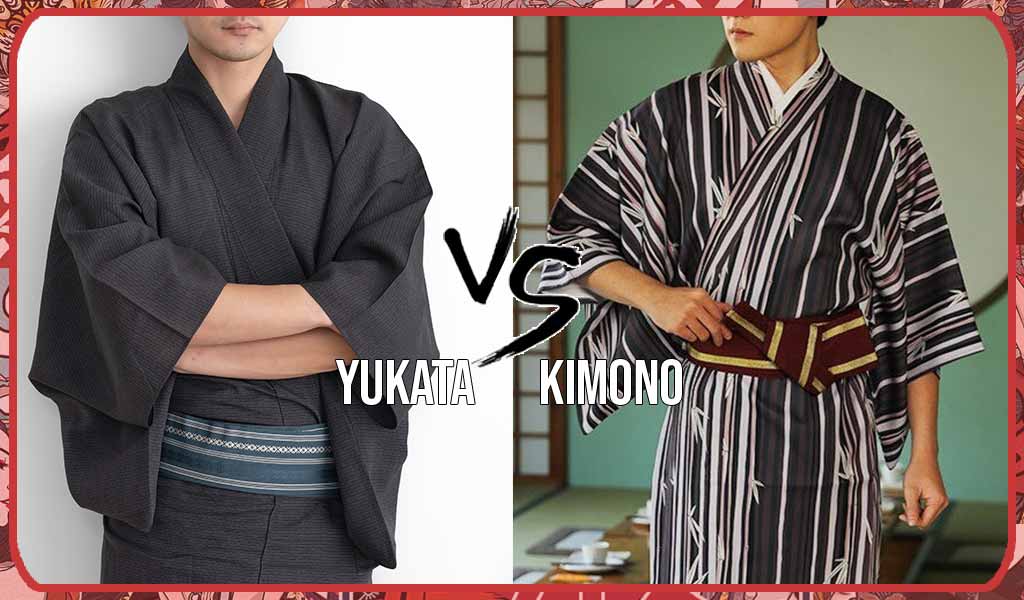
Not sure whether to choose a kimono or a yukata in Japan? When it comes to kimono vs yukata, making the right choice can enhance your travel experience. This guide breaks down the key differences so you can make a quick decision while travelling.
Quick Comparison: Kimono vs Yukata
kimono vs yukata
| Feature |
Yukata (Casual) |
Kimono (Casual to Formal) |
|---|---|---|
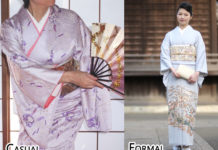
| Material | Cotton, linen, polyester | Cotton, linen, polyester (thicker than yukata) |
| Collar Layers | Single layer (worn directly over underwear) | Two layers (with nagajuban underneath) |
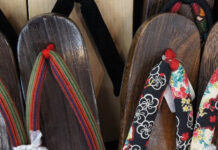
| Footwear | Geta(下駄) wooden sandals worn barefoot | Zori(草履) sandals with tabi socks |
| Typical Occasions | Festivals, fireworks, casual outings | Sightseeing, casual outings, formal events, weddings, and tea ceremonies |
When Should You Wear a Yukata or a Kimono?
Both yukata and kimono are traditional Japanese garments, ranging from casual everyday wear to highly formal attire.
Since the appropriate choice depends on the occasion, it is best to tell the shop staff where you plan to wear it—they will help you choose the most suitable option.
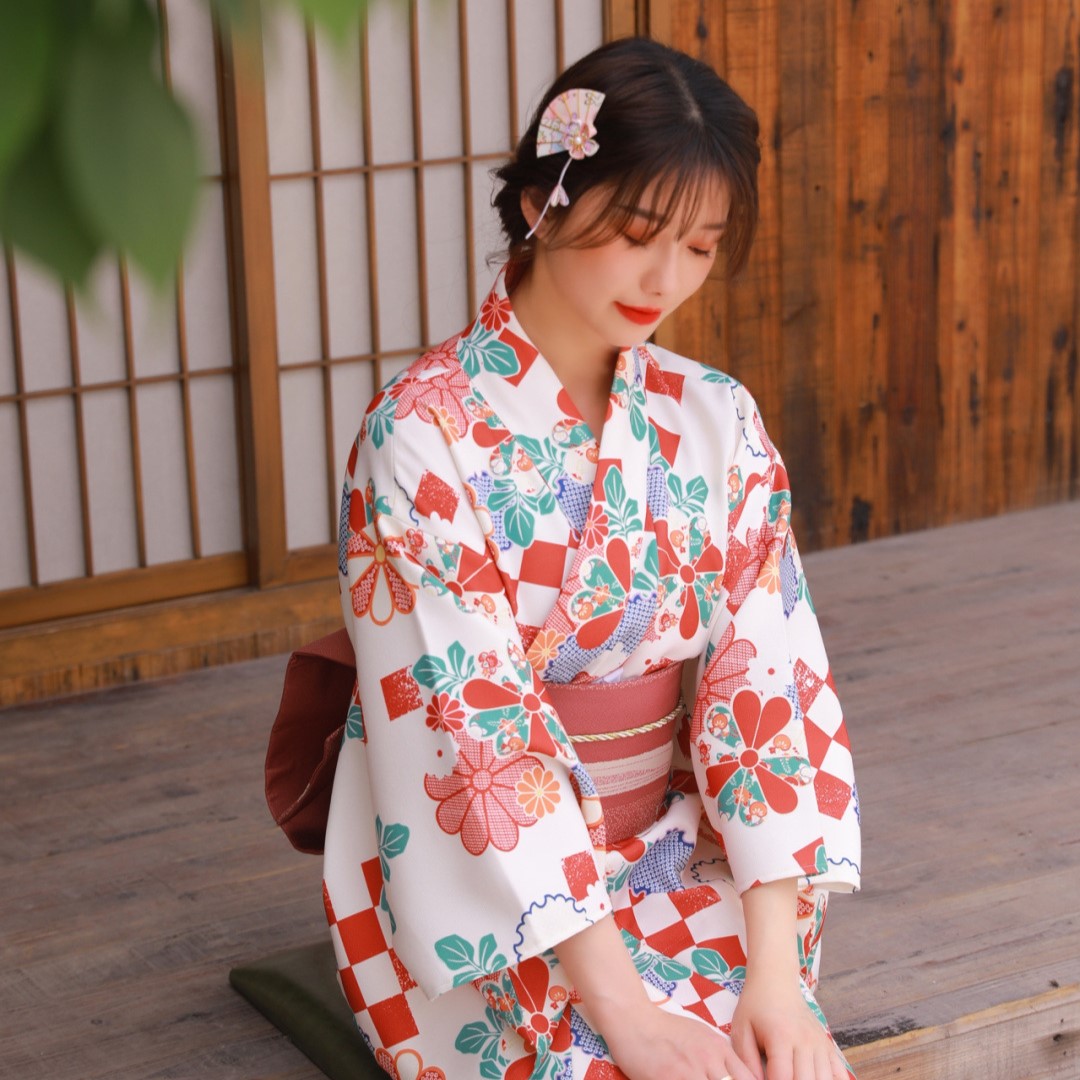
- Hot summer days (July–August): Lightweight and breathable, ideal for Japan’s humid summer
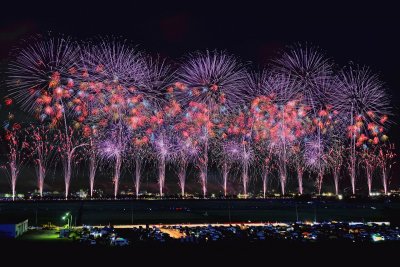
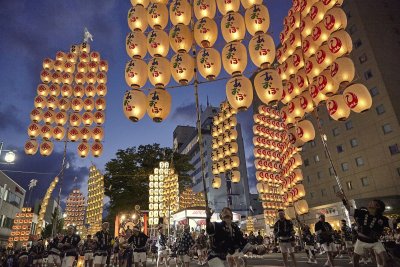
- Festivals and fireworks events: A classic summer style
- Relaxing at a hot spring ryokan: Perfect as loungewear after bathing
- If you want something easy and affordable: Easier to wear and generally cheaper to rent than a kimono
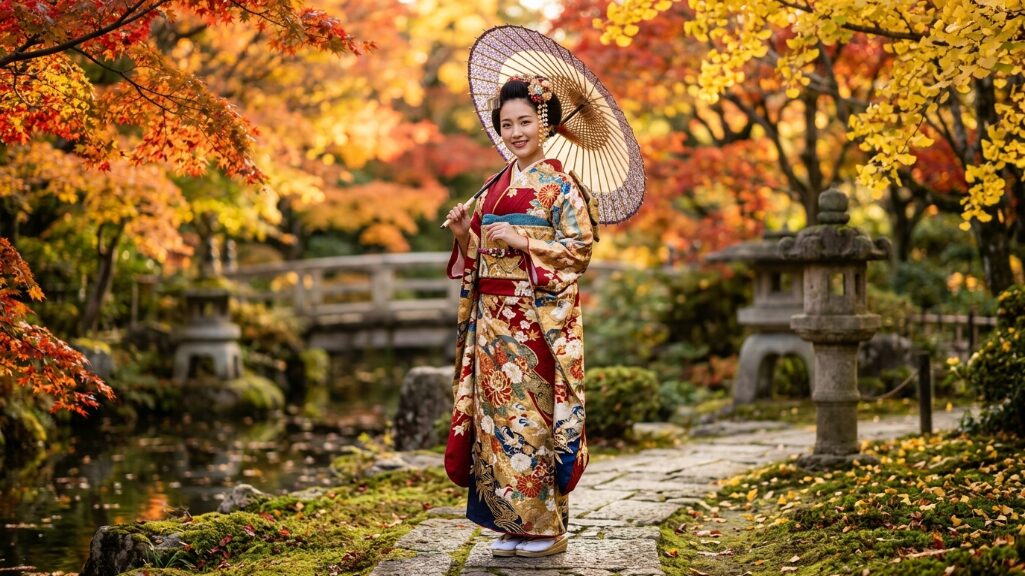
When to Choose a Kimono
- Spring, autumn, or winter travel (March–June, September–December):Better suited for cooler seasons, as kimono is worn in layers
- Attending formal occasions such as tea ceremonies or weddings: Wearing a formal kimono enhances the atmosphere and adds a sense of occasion
- Taking formal photos as a travel memory: Bright, decorative styles such as furisode (for unmarried women) or hōmongi (for both married and unmarried women) are recommended. Men can choose a formal haori hakama style.
- To experience the texture of traditional Japanese textiles and the beauty of layered styling: In particular, silk kimono—considered high-end garments—have a rich, substantial weight, allowing you to truly feel the craftsmanship through their intricate dyeing and embroidery.
Types of Kimono: Understanding Formal and Casual Styles
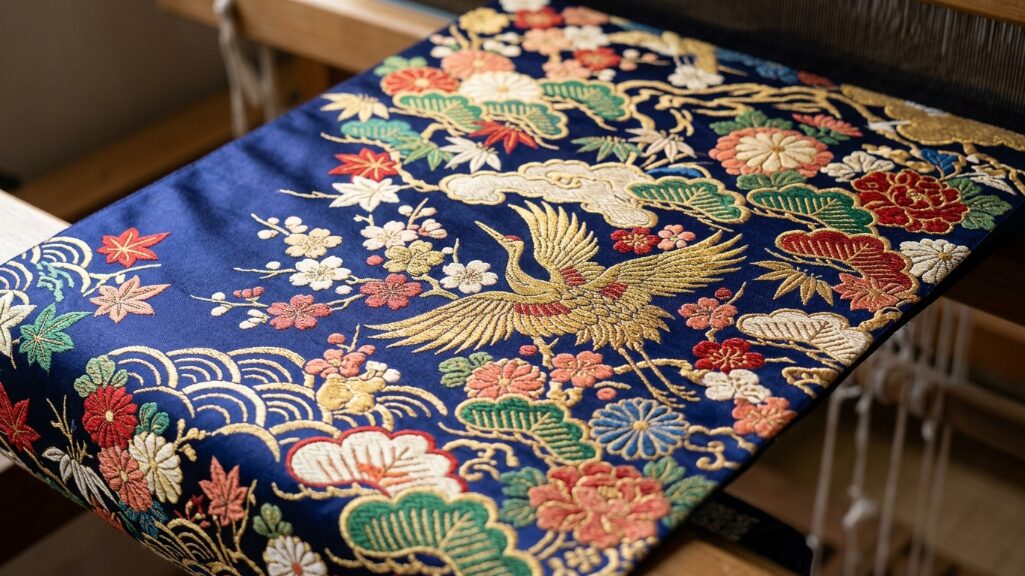
- Formal Kimono for Special Occasions
There are various types of formal kimono worn depending on the occasion, such as furisode, which is worn only by young unmarried women, and tomesode or hōmongi, which can be worn by both unmarried and married women. These are typically worn at coming-of-age ceremonies, by guests attending weddings, and at tea gatherings, and are not used for everyday wear. - Casual Everyday Kimono
Not all kimono are formal wear. There are also casual kimono that can be worn for everyday use. Many are made from durable fabrics such as cotton or linen, and more recently, some are even made from denim.
If you are unsure about the appropriate style or what to wear for a particular setting, the best option is to ask the shop staff. They can guide you and help you choose a style that suits you.
Enjoy traditional Japanese fashion freely, choosing a style that suits the occasion.
The word kimono (着物) literally means “something to wear” (ki = wear, mono = thing). Originally, it referred to all clothing worn by people in Japan. However, as Western-style clothing became widespread from the Meiji era onward, the term gradually came to refer specifically to traditional Japanese garments.
|
Types of Yukata: Understanding Styles and Etiquette
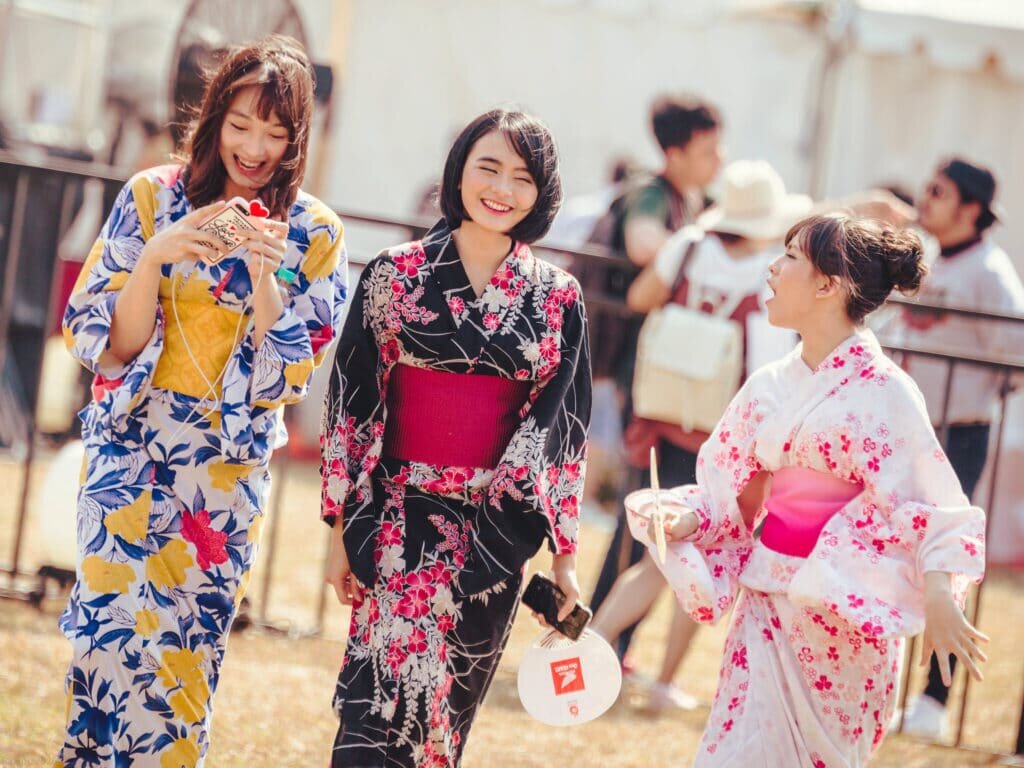
Did you know that there are different types of yukata? There are stylish yukata worn for summer festivals and casual outings, as well as the simpler yukata provided at ryokan and hotels.
Be Careful with Ryokan Yukata: Common Etiquette Mistakes to Avoid
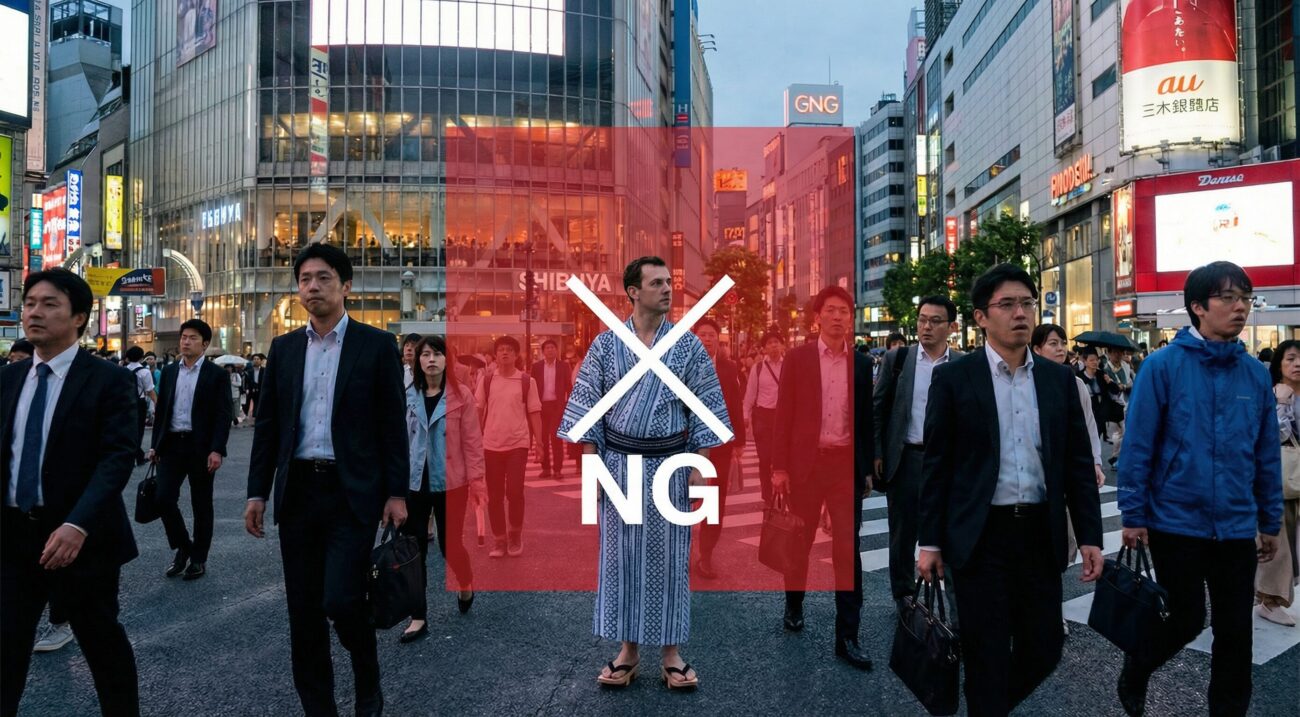
A common mistake among international visitors is wearing the yukata provided at ryokan or hotels outside the ryokan or hot spring areas.
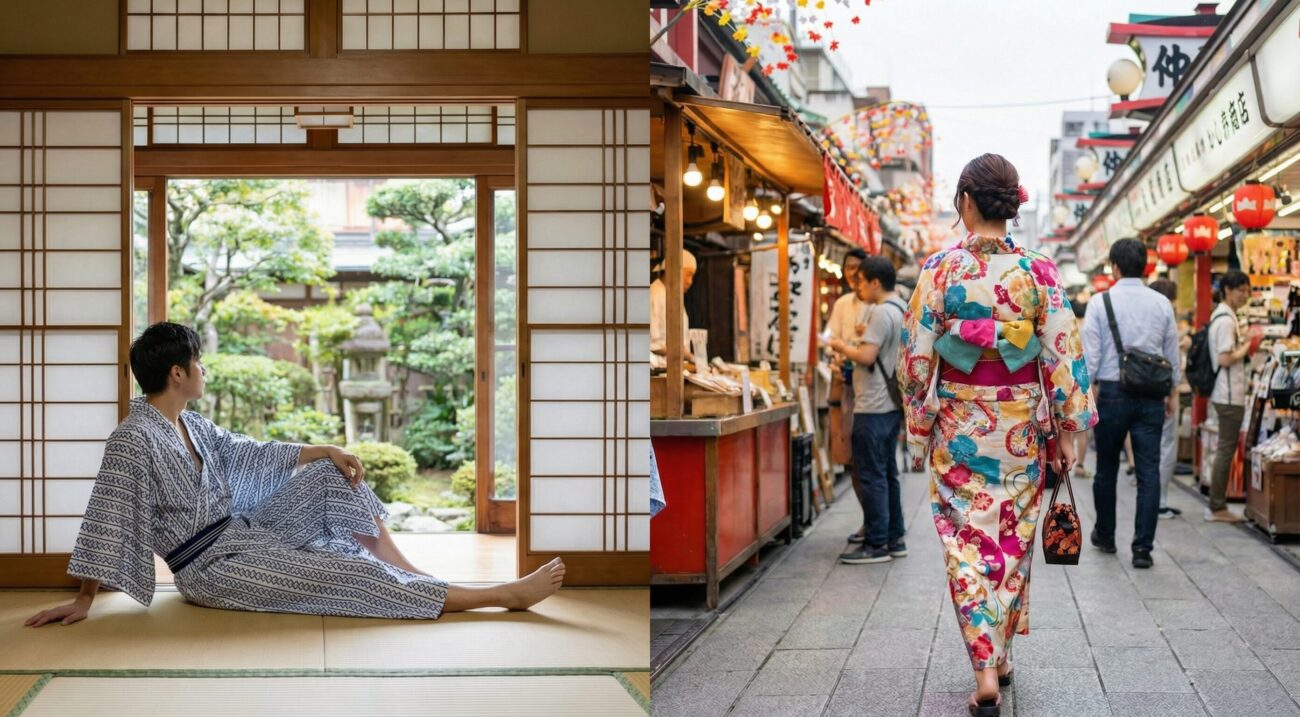
-
Ryokan Yukata: Typically feature simple blue-and-white geometric patterns. These are essentially loungewear or sleepwear. While wearing them for a walk around a hot spring area is acceptable, wearing them outside such areas may be considered inappropriate.
-
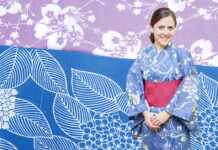
Yukata for Outings: Characterised by light, summery colours and vibrant patterns. Ideal for festivals and casual strolls around town. You can also enjoy coordinating them with different obi and accessories. These are the type of yukata available at rental shops, including styles designed for men.
Essential Rule: Wear It Right Over Left
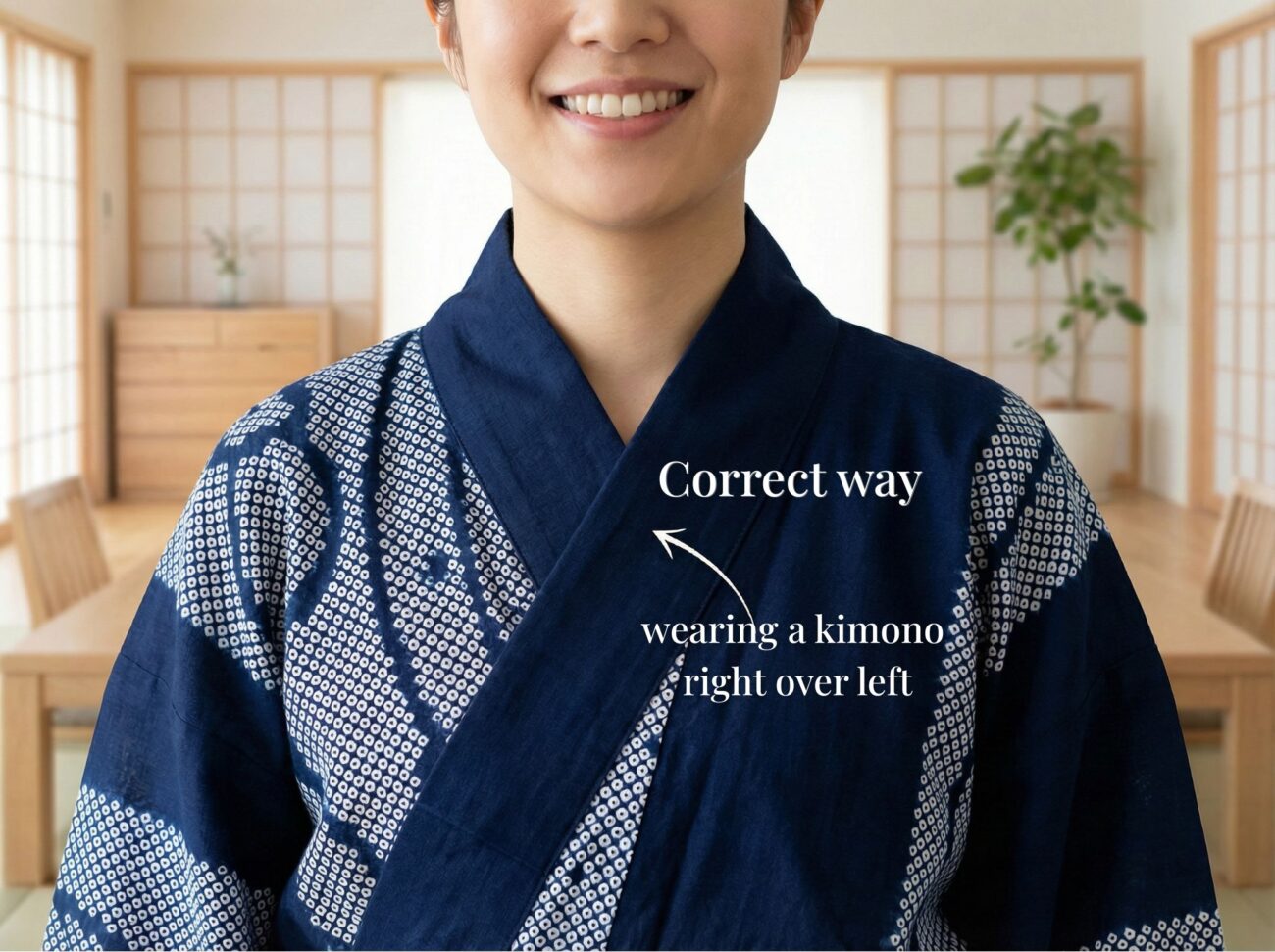
This means the right side is wrapped against the body first, and the left side is wrapped over it.
When viewed from the front, the overlap of the collar should form a shape similar to a lowercase “y”.
If worn the opposite way, with the right side over the left, it resembles how kimono are dressed on the deceased in Japan and is considered highly inappropriate. Be especially careful when readjusting your outfit.
How to Tell the Difference Between Kimono and Yukata: 3 Quick Checks
Have you ever wondered, while walking around places like Kyoto or Asakusa, whether someone is wearing a kimono or a yukata? By checking the following three points, you can tell the difference at a glance.
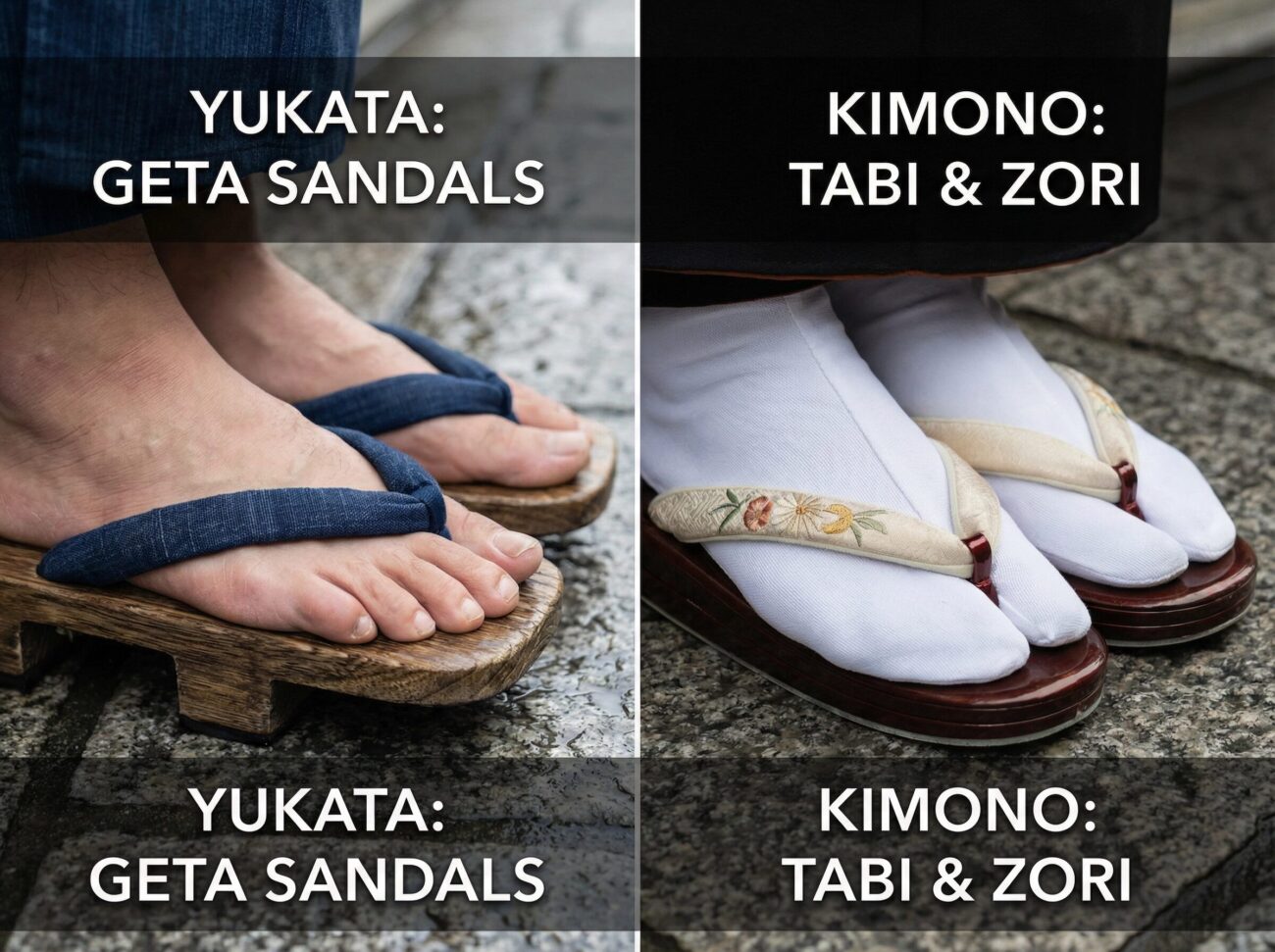
Footwear (Presence of Tabi Socks):
Yukata: Worn barefoot with wooden geta.
Kimono: Always worn with tabi (split-toe socks), along with zori sandals.
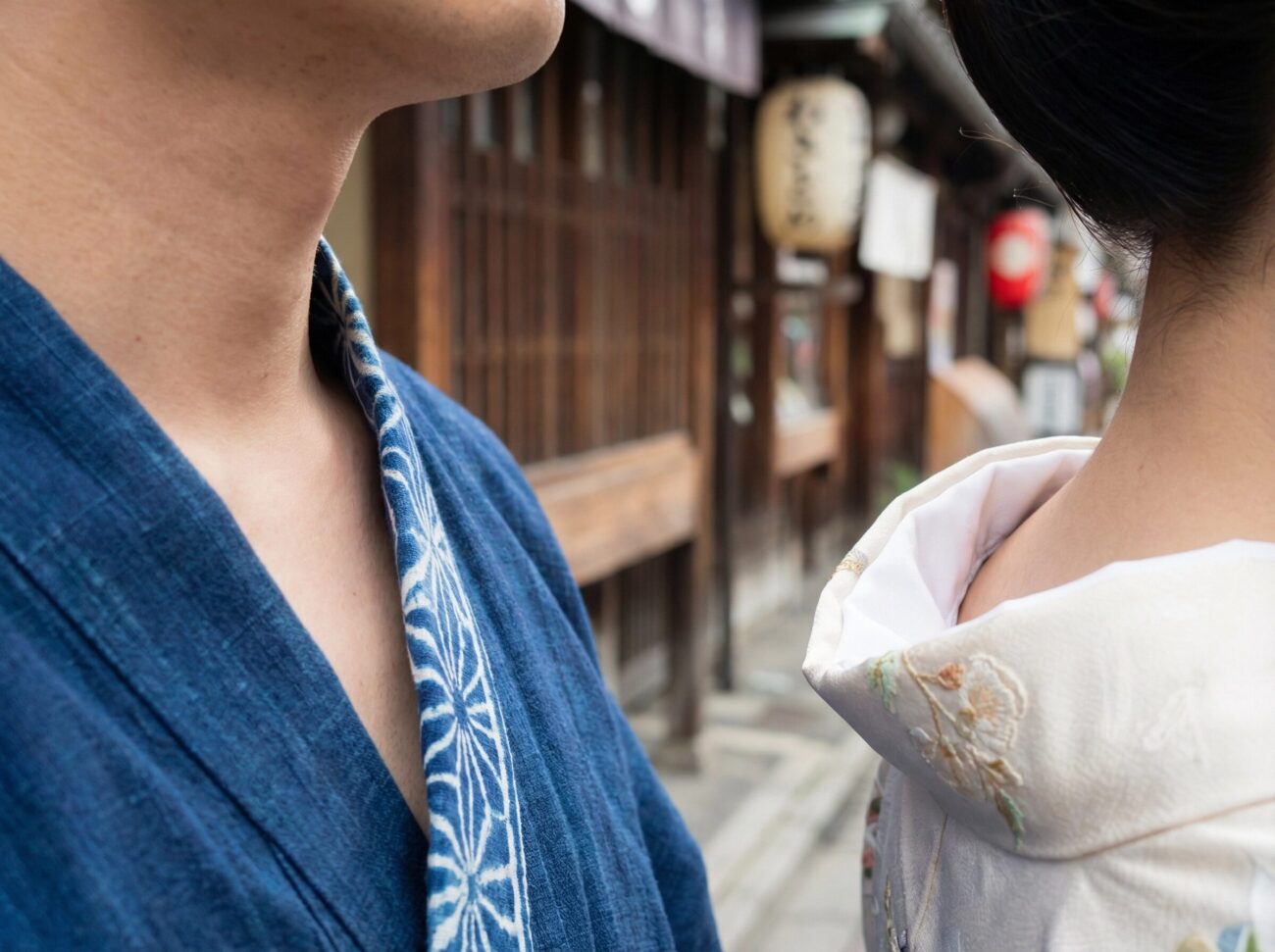
Collar (Layering at the Neck):
Yukata: Only one collar, worn directly over the skin or light undergarments.
Kimono: A second collar is visible underneath. This is the haneri (decorative collar) attached to the nagajuban. While white is most common, different colours and patterns may also be used to match the kimono and the season.
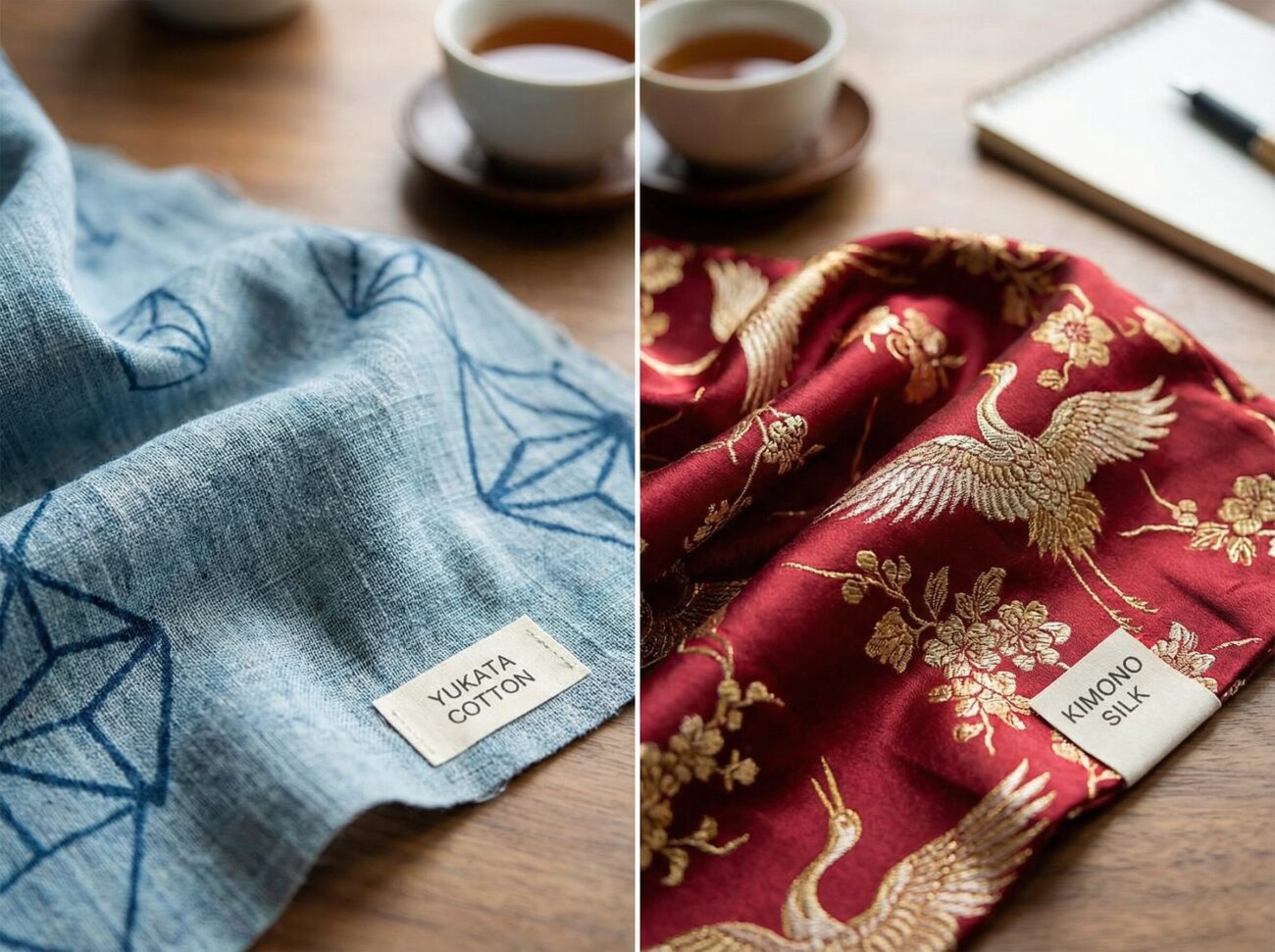
Fabric (Thickness and Texture):
Yukata: Typically made from lightweight, breathable fabrics such as cotton or linen. They feel light and smooth against the skin.
Kimono: While some are made from cotton or linen, the fabric is generally thicker than that of a yukata. High-quality silk kimono, in particular, have a subtle sheen and a rich, substantial feel.
Did you know?
In recent years, a hybrid style known as “kimono-style yukata” has become increasingly popular. By wearing a nagajuban (with a visible white collar) underneath a lightweight yukata and adding tabi socks, the look becomes more refined and similar to a kimono. This style is especially popular for slightly more formal summer outings. However, it is not appropriate for strictly formal occasions.
The Meaning Behind the Patterns: Symbolism in Kimono and Yukata
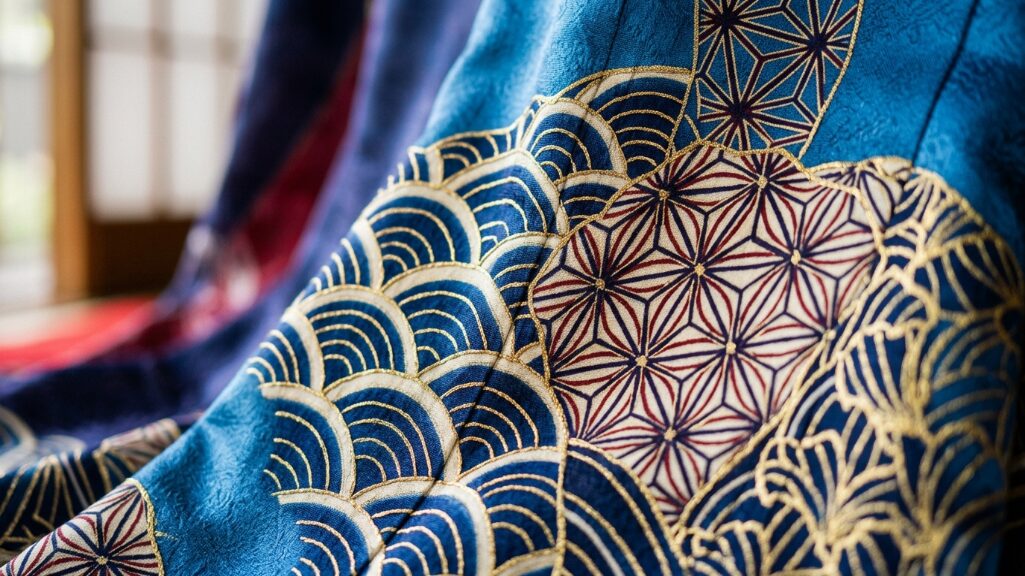
Patterns on kimono and yukata are not just decorative. Each design carries its own meaning and wishes.
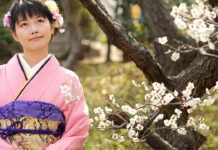
Cherry Blossoms: One of Japan’s national symbols. They represent new beginnings and the fleeting nature of beauty. While strongly associated with spring, stylised cherry blossom patterns can be worn year-round.
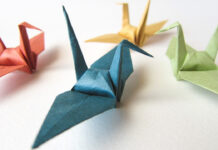
Cranes: A symbol of longevity, happiness, and good fortune. Often used in formal kimono for celebratory occasions such as weddings and coming-of-age ceremonies, but also commonly seen in yukata.
Seigai-ha (Blue Ocean Waves): A geometric pattern of overlapping waves. It symbolises a wish for a peaceful and calm life that continues endlessly, like the waves spreading out to the horizon. A classic motif often seen on yukata.
Asa-no-ha (Hemp Leaf): A hexagonal geometric pattern. As hemp grows quickly and is strong, it symbolises wishes for healthy growth, especially for children.
Peony: Known as the “king of flowers,” it symbolises wealth, prosperity, and happiness.
Pine, Bamboo, and Plum (Shō-chiku-bai): A classic auspicious motif combining pine (longevity), bamboo (resilience and growth), and plum (purity and good fortune). It is especially suitable for celebratory occasions such as New Year and weddings.
Experience Traditional Japanese Dress: What to Know About Kimono Rental Costs and Process
If you want to enjoy wearing traditional Japanese clothing in Japan, using a rental shop is the easiest and most reliable option. Wearing a kimono requires not only the garment itself but also various accessories such as cords, an obi, and a nagajuban. With a rental, everything you need is provided as a complete set.
Thinking of Renting a Kimono?
| Average:45 minutes | From around ¥5,000 | Free |
| 着付けの時間 Dressing Time: | 平均的な費用 Average cost | 荷物預かり |
| Depending on the type of outfit, it typically takes between 30 minutes and 2 hours. This estimate includes selecting the outfit, dressing, and hair styling. | Typical price for a one-day rental plan, with all accessories included. | Many shops offer free storage for your clothes and bags after changing. |
|
Casual (Summer)
浴衣 Yukata
¥2,000〜8,000
With hair styling: From ¥3,500
Occasions: Summer festivals, fireworks, casual outings
Dressing time: Approx. 15–30 minutes
|
Casual (Year-Round)
着物 Kimono
¥4,000〜8,000
With hair styling: From ¥5,000
Occasions: Sightseeing, casual outings, dates
Dressing time: Approx. 30–45 minutes
|
|
|
Note: Prices are based on typical one-day rental rates in tourist areas such as Kyoto and Asakusa, including dressing and all accessories. For men, prices generally range from ¥3,000 to ¥7,000. Formal kimono (such as furisode or tomesode) start from around ¥20,000. Dressing time is an estimate and includes outfit selection and hair styling. |
||
Steps for Kimono Rental
| STEP 1 | STEP 2 | STEP 3 | STEP 4 |
|---|---|---|---|
| Choose Your Favourite Kimono/Yukata | Dressing & Hair Styling | Enjoy Sightseeing and Exploring the City | Return & Change Back |
Many shops offer free storage for your clothes and bags after changing.